
Last updated on May 6th, 2026 at 07:15 am
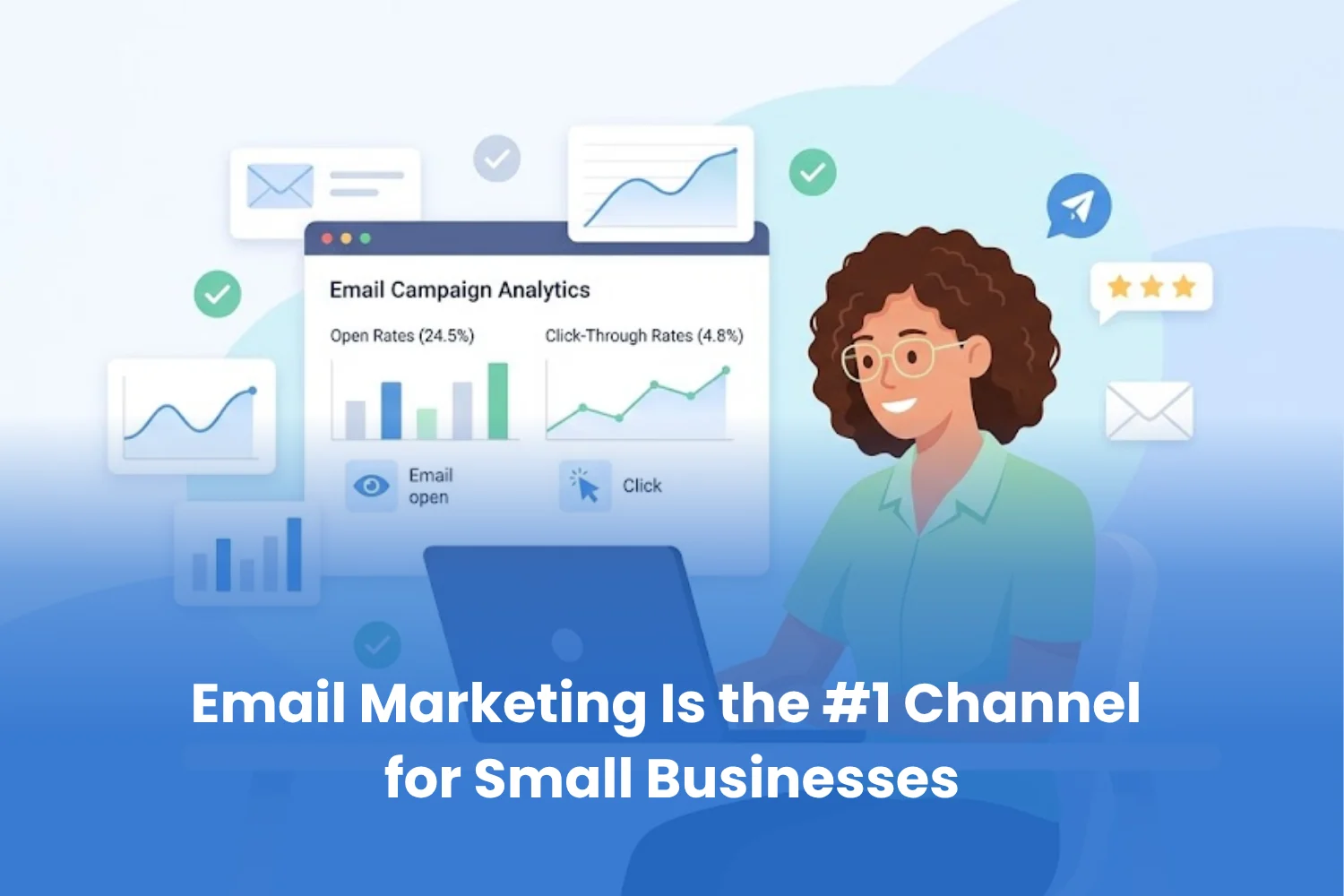
If you run a small business, email marketing isn’t optional — it’s your most powerful growth engine.
Unlike social media where algorithms decide who sees your content, or paid ads that stop working the moment you stop paying, email gives you direct, owned access to your audience. No middleman. No algorithm. Just you and your subscribers.
The numbers back this up:
- Email marketing delivers $36–$45 in ROI for every $1 spent — the highest of any marketing channel
- 72% of brands say email is their most effective marketing channel (Forbes, 2025)
- 51% of consumers prefer to be contacted by brands via email over any other channel
- Small businesses that use email marketing see 50% more sales than those that don’t
Yet many small business owners struggle with building a solid email marketing strategy for small business — not because it doesn’t work, but because they lack a clear system to execute it consistently.
This guide gives you both. We’ll walk through a complete email marketing strategy for small business — a proven framework you can implement today — plus show you how to manage everything using the Email Marketing Toolkit in Notion.
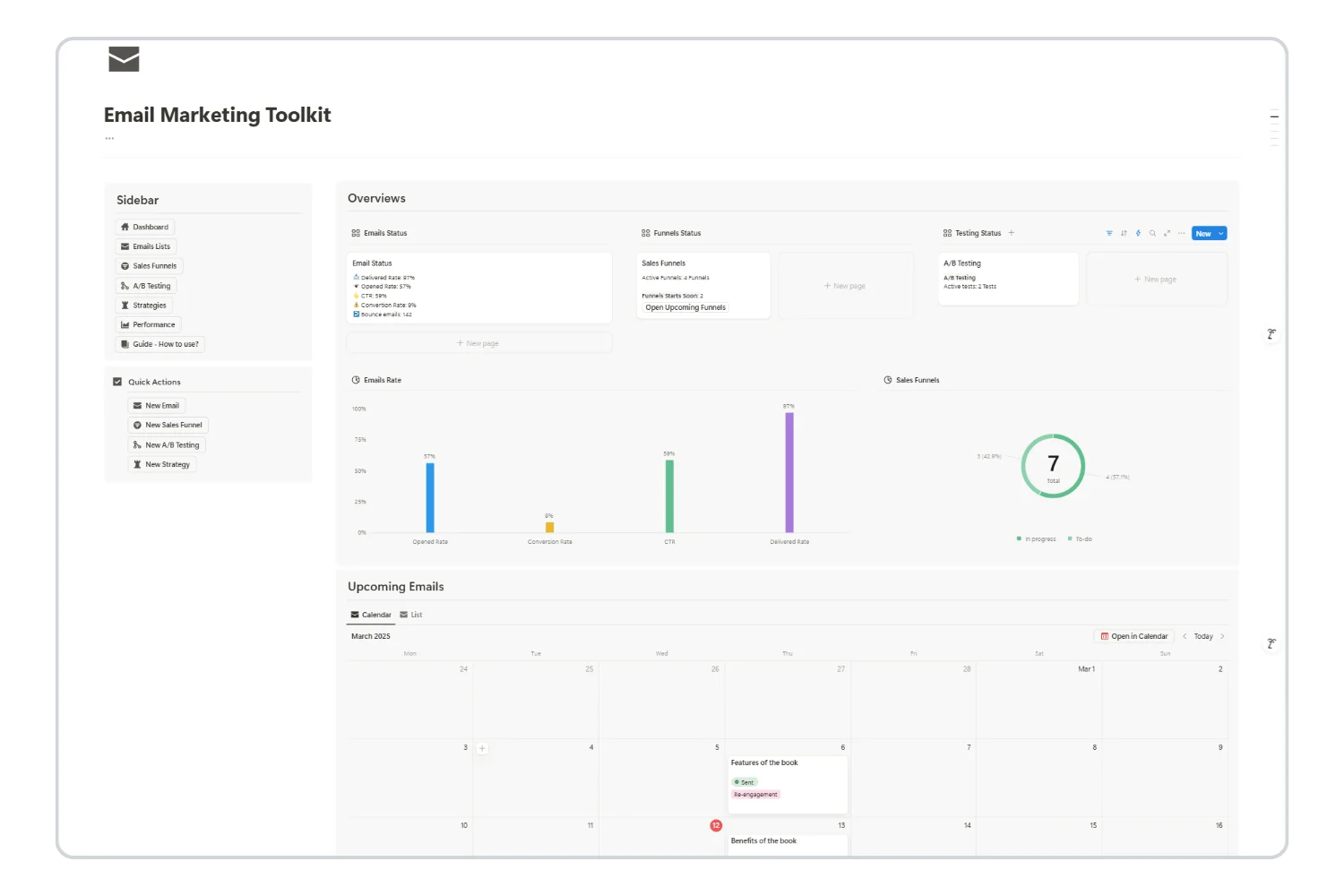
Table of Contents
What You’ll Learn
The Small Business Email Marketing Strategy Framework
A successful email marketing strategy for small business has five core pillars. Master each one, and you’ll have a system that generates revenue on autopilot.
The 5 Pillars at a Glance
- Foundation — Goals, audience, and brand voice
- List Building — Growing a quality subscriber base
- Segmentation — Sending the right message to the right people
- Content Strategy — What to send and when
- Optimization — Testing, analyzing, and improving
Let’s break each one down.
Pillar 1: Set Your Foundation
The foundation of any email marketing strategy for small business starts before you write a single email. You need clarity on three things: your goals, your audience, and your brand voice.
Define Your Email Marketing Goals
Every email you send should connect to a business objective. Common goals for small businesses:
- Drive sales — Promote products/services and convert subscribers into buyers
- Build relationships — Nurture trust so subscribers become loyal customers
- Increase retention — Keep existing customers engaged and reduce churn
- Generate leads — Capture interest and move prospects through your funnel
- Educate your audience — Position yourself as an expert in your field
Pick 1–2 primary goals to focus on. Trying to do everything at once dilutes your strategy.
Know Your Audience
The foundation of every great email is understanding who you’re writing to. Create a simple audience profile:
- Who are they? (Demographics, job title, business size)
- What’s their biggest challenge? (The pain point your product solves)
- Where are they in the buyer journey? (Awareness, consideration, decision)
- What content do they value? (Tips, case studies, deals, inspiration)
You don’t need a 50-page persona document. A clear, one-paragraph description of your ideal subscriber is enough to guide every email you write.
Establish Your Brand Voice
Your emails should sound like you — not a generic corporate newsletter. Define your tone:
- Casual and friendly — Perfect for B2C, lifestyle, and creative businesses
- Professional and authoritative — Ideal for B2B, consulting, and finance
- Educational and supportive — Great for coaches, SaaS, and service providers
Consistency in voice builds recognition and trust over time.
Pillar 2: Build Your Email List
List building is the engine of every email marketing strategy for small business. Your email list is your most valuable business asset. Here’s how to grow it with quality subscribers who actually want to hear from you.
Lead Magnets That Work for Small Businesses
A lead magnet is a free resource you offer in exchange for an email address. The best lead magnets solve a specific, immediate problem:
High-Converting Lead Magnet Ideas:
- Checklists — “The 10-Point Email Campaign Launch Checklist
- Templates — “Free Email Marketing Calendar Template for Notion
- Guides — “The Small Business Owner’s Guide to Email Automation”
- Discount codes — “Get 15% off your first order”
- Free tools — “Email Subject Line Analyzer
- Mini courses — “5-Day Email Marketing Bootcamp”
- Webinar replays — “How We Grew Our List to 10K Subscribers”
The key principle: specificity beats generality. Free Marketing Guide” converts far less than “7-Step Email Sequence That Converts Cold Leads into Customers.
Opt-In Placement Strategy
Where you place your sign-up forms matters as much as what you offer:
- Homepage hero section — Highest visibility, capture visitors immediately
- Blog posts — Embed relevant lead magnets within educational content
- Exit-intent popups — Capture leaving visitors with a compelling offer
- About page — People reading your story are already interested
- Social media bios — Direct followers to a landing page
- Checkout page — Capture buyers for post-purchase nurturing
Growing Your List Ethically
- Never buy email lists — Purchased lists destroy deliverability and violate regulations
- Always use double opt-in — Confirms subscriber intent and improves list quality
- Set expectations — Tell subscribers what they’ll receive and how often
- Make unsubscribing easy — A clean list is more valuable than a large one
Pillar 3: Segment Your Audience
No email marketing strategy for small business is complete without segmentation. Sending the same email to your entire list is the fastest way to lose subscribers. Segmentation means dividing your list into groups so you can send targeted, relevant content.
Essential Segments for Small Businesses
By Engagement Level:
- Active subscribers — Opened or clicked in the last 30 days
- Warm subscribers — Engaged in the last 30–90 days
- Cold subscribers — No engagement in 90+ days
By Customer Status:
- Prospects — Signed up but haven’t purchased
- First-time buyers — Made one purchase
- Repeat customers — Multiple purchases
- VIP customers — Highest spending or most engaged
By Interest/Behavior:
- Content topic preference — What blog posts or resources they downloaded
- Product category interest — What pages they visited or items they browsed
- Lead magnet source — Which opt-in brought them to your list
Why Segmentation Matters
- Segmented emails generate 760% more revenue than one-size-fits-all campaigns
- Segmented campaigns see 14% higher open rates and 100% higher click rates
- Subscribers are 75% more likely to click on emails from segmented campaigns
Even simple 2–3 segment strategies dramatically outperform broadcast emails.
How to Segment in Your Email Marketing Toolkit
The Email Marketing Toolkit for Notion lets you:
- Tag contacts by segment — Engagement level, customer status, interest area
- Plan segment-specific campaigns — Map which emails go to which groups
- Track segment performance — See which segments drive the most revenue
Pillar 4: Plan Your Content Strategy
Now that you know your audience and segments, the next piece of your email marketing strategy for small business is planning what to send and when to send it.
The 5 Email Types Every Small Business Needs
1. Welcome Sequence (Automated)
Triggered when someone joins your list. This is your first impression — make it count.
- Email 1: Welcome + deliver lead magnet (Day 0)
- Email 2: Your story + what to expect (Day 1)
- Email 3: Best content or top product recommendation (Day 3)
- Email 4: Social proof + testimonials (Day 5)
- Email 5: Soft offer or call to action (Day 7)
2. Newsletter (Weekly or Bi-weekly)
Consistent value that keeps you top of mind:
- Industry tips and insights
- Behind-the-scenes content
- Curated resources
- Personal stories and lessons learned
3. Promotional Emails (As Needed)
Direct sales and offers:
- Product launches
- Sales and discounts
- Limited-time offers
- Bundle deals
4. Nurture Sequences (Automated)
Move prospects toward a purchase decision:
- Educational content series
- Case studies and success stories
- FAQ and objection handling
- Comparison guides
5. Re-engagement Campaigns (Quarterly)
Win back inactive subscribers:
- “We miss you” emails
- Special “come back” offers
- Preference update requests
- List cleanup (remove truly inactive contacts)
Creating Your Email Calendar
Consistency is what separates successful email marketers from everyone else. Plan your emails at least 2–4 weeks in advance:
Weekly Email Calendar Example:
- Monday: Newsletter with weekly value content
- Wednesday: Educational or nurture email
- Friday: Promotional or engagement email (alternate weeks)
Monthly Planning Rhythm:
- Week 1: Plan the month’s campaigns and themes
- Week 2–3: Write and schedule emails
- Week 4: Review performance and adjust next month’s plan
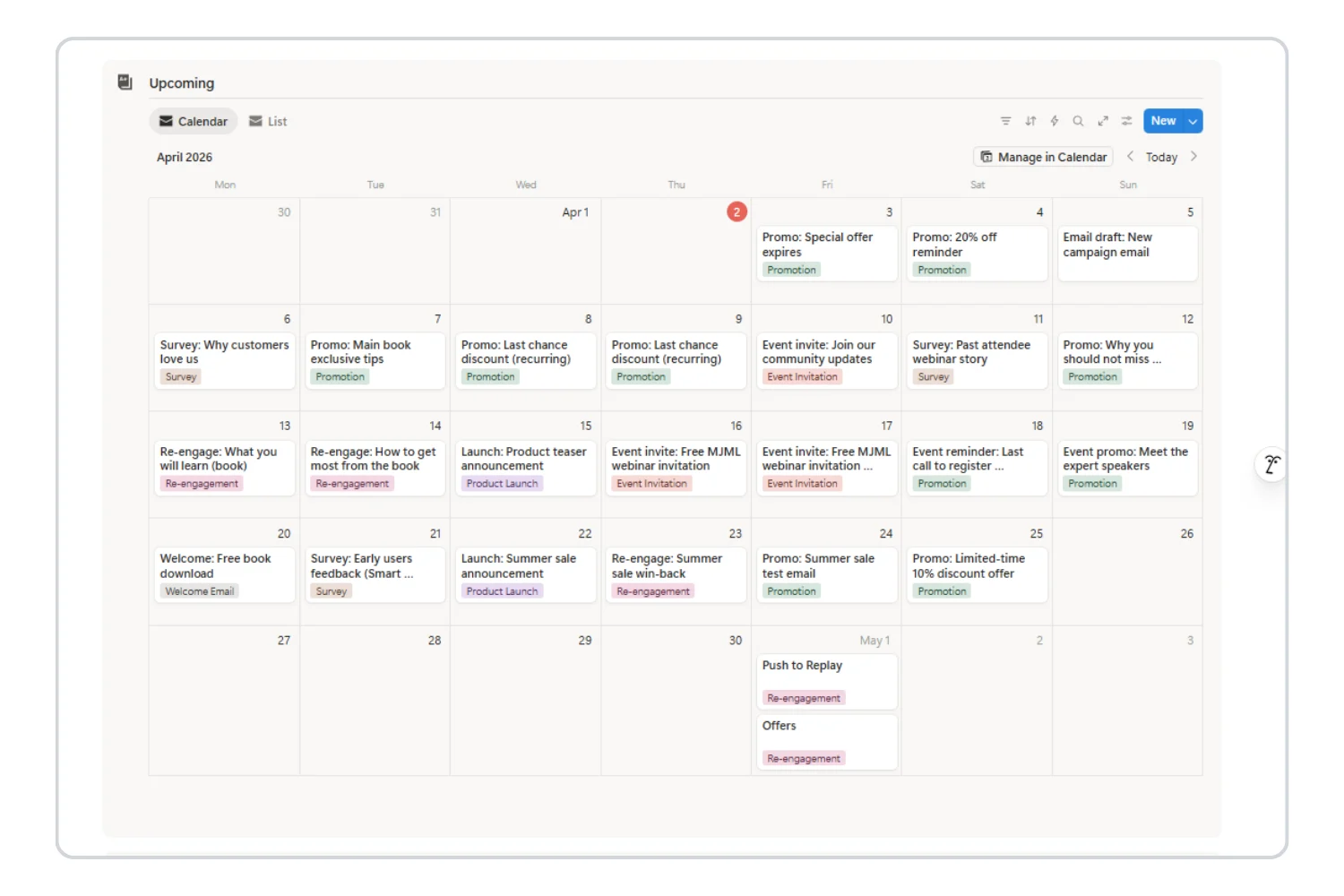
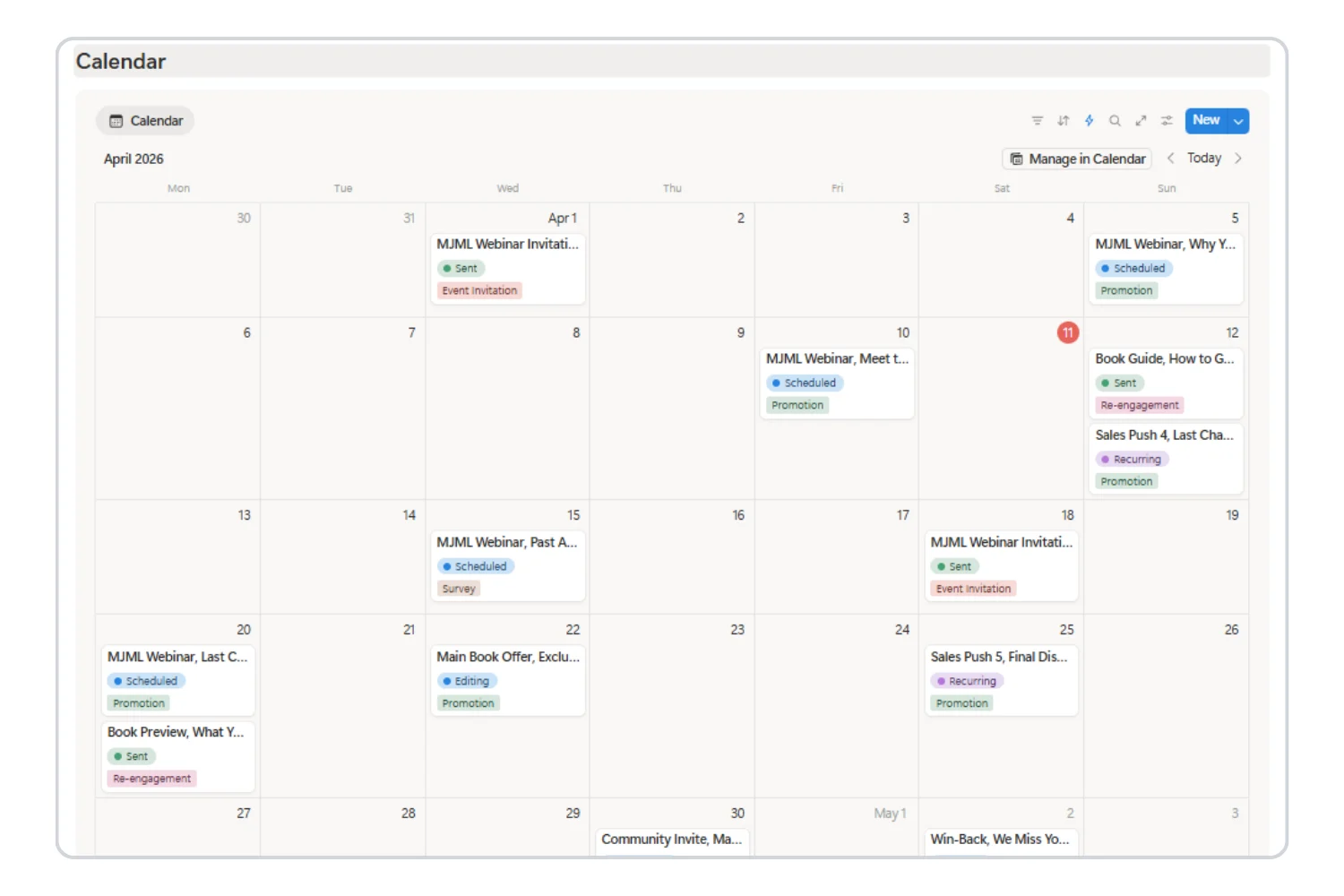
The Email Marketing Toolkit gives you a visual calendar to plan, schedule, and track every email — so nothing falls through the cracks.
Pillar 5: Optimize and Improve
The best email marketing strategy for small business is never static. The best marketers don’t just send — they learn and adapt. Here’s how to continuously improve your results.
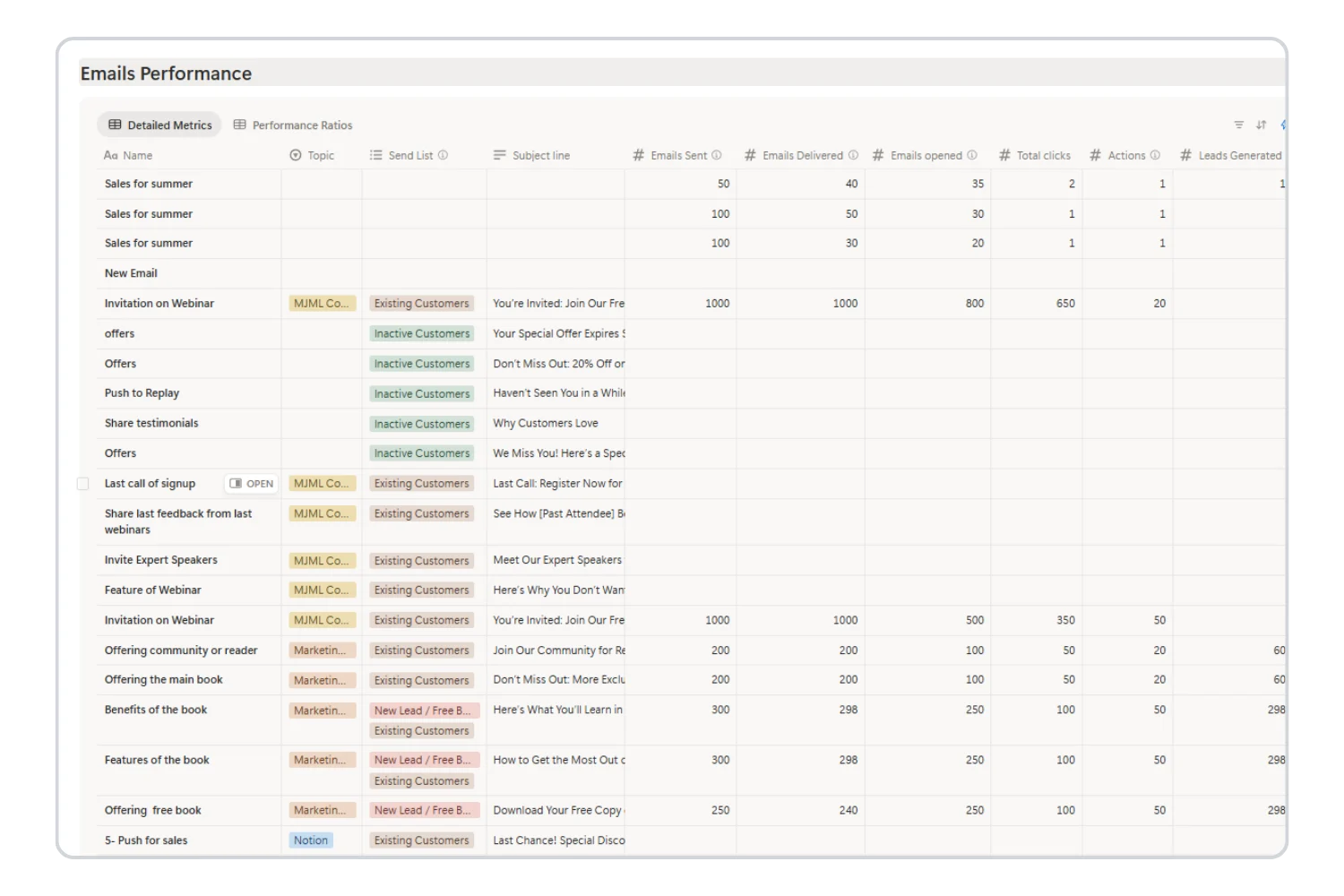
Key Metrics to Track
- Open Rate — Target: 35–45% (measures subject line effectiveness)
- Click-Through Rate (CTR) — Target: 2–5% (measures content engagement)
- Conversion Rate — Target: 2–5% (measures how well emails drive action)
- Unsubscribe Rate — Target: Under 0.5% (measures audience satisfaction)
- Revenue Per Email — The ultimate metric for ROI
A/B Testing Strategy
Test one element at a time to learn what works:
- Subject lines — Test every campaign (highest impact)
- Send times — Test morning vs. afternoon, weekday vs. weekend
- CTA buttons — Test text, color, placement
- Email length — Short vs. long-form
- Content format — Text-only vs. designed templates
Monthly Review Checklist
- ✅ Which emails had the highest open rates? Why?
- ✅ Which emails drove the most clicks and conversions?
- ✅ What subject line formulas performed best?
- ✅ Which segments are most engaged?
- ✅ Are any segments declining in engagement?
- ✅ What should you test next month?
Common Email Marketing Mistakes Small Businesses Make
Avoid these pitfalls that sabotage your email marketing strategy for small business:
1. No Welcome Sequence
New subscribers are most engaged in the first 48 hours. If you don’t email them immediately, you lose that momentum forever. Set up an automated welcome sequence before you do anything else.
2. Inconsistent Sending
Sending 5 emails one week and then going silent for a month confuses subscribers and damages deliverability. Pick a realistic frequency and stick to it.
3. Only Sending When You Want Something
If every email is a sales pitch, subscribers tune out fast. Follow the 80/20 rule: 80% value content, 20% promotional.
4. Ignoring Mobile
Over 60% of emails are opened on mobile. Always preview your emails on a phone before sending. Keep paragraphs short, buttons large, and images optimized.
5. Not Cleaning Your List
Dead subscribers hurt your sender reputation and deliverability. Remove inactive contacts every 90 days. A smaller, engaged list always outperforms a large, unresponsive one.
6. No Clear Call to Action
Every email should have one primary CTA. Don’t confuse readers with multiple asks — pick the most important action and make it obvious.
Your 30-Day Email Marketing Launch Plan
Here’s a step-by-step plan to put your email marketing strategy for small business into action in 30 days:
Week 1: Foundation
- Day 1–2: Define your goals and audience profile
- Day 3–4: Set up your email platform and connect to your website
- Day 5–7: Create your first lead magnet
Week 2: List Building
- Day 8–9: Set up opt-in forms on your website (homepage, blog, exit intent)
- Day 10–11: Create a landing page for your lead magnet
- Day 12–14: Write and automate your 5-email welcome sequence
Week 3: Content Planning
- Day 15–16: Set up your email calendar in the Email Marketing Toolkit
- Day 17–18: Plan your first month of newsletters and campaigns
- Day 19–21: Write and schedule your first 2 weeks of emails
Week 4: Launch and Optimize
- Day 22–23: Send your first newsletter campaign
- Day 24–25: Set up A/B testing for subject lines
- Day 26–28: Review initial metrics and adjust
- Day 29–30: Plan next month’s campaigns based on what you learned
Manage Your Entire Strategy in One Place
The biggest challenge with any email marketing strategy for small business isn’t knowing what to do — it’s staying organized while doing it.
That’s exactly what the Email Marketing Toolkit for Notion solves. It gives you:
- Campaign Planner — Map out every email with dates, segments, and goals
- Content Calendar — Visualize your entire email schedule at a glance
- Audience Segments — Track and organize your subscriber groups
- Performance Dashboard — Monitor open rates, clicks, and conversions
- Template Library — Store your best-performing emails for reuse
- A/B Test Tracker — Document what works and what doesn’t
Everything lives in one Notion workspace — no switching between tools, no scattered spreadsheets, no missed campaigns.
👉 Get the Email Marketing Toolkit
Just getting started and want something lighter? The Email Marketing Mini Planner gives you the essentials — calendar, campaign planning, and basic tracking — completely free.
Frequently Asked Questions
What is an email marketing strategy for small business?
An email marketing strategy for small business is a plan that defines how you grow your subscriber list, what emails you send, when you send them, and how you measure results. It covers everything from your lead magnets and welcome sequences to segmentation, content planning, and optimization. A good strategy turns email into a consistent, revenue-generating channel you own.
How do I start email marketing for my small business?
Start with three steps: pick an email platform (Mailchimp, ConvertKit, or ActiveCampaign are popular for small businesses), create a simple lead magnet to grow your list, and write a 5-email welcome sequence. Once those are live, build your content calendar and plan weekly or bi-weekly newsletters. You don’t need a large list to start — you need a clear system.
How often should a small business send marketing emails?
For most small businesses, 1–2 emails per week is the sweet spot. Enough to stay top of mind, not so much that you burn out your list. The most important thing is consistency. Sending once a week every week outperforms sending 5 emails one month and going silent the next.
What is the best email marketing platform for small businesses?
The best platform depends on your needs. Mailchimp is ideal for beginners with a free plan up to 500 contacts. ConvertKit is better for creators and coaches. ActiveCampaign is the strongest for automation-heavy strategies. All three integrate with Notion workflows and support the framework in this guide.
How do I grow my email list as a small business?
Focus on lead magnets first — a free checklist, template, or mini guide that solves a specific problem your audience has. Place opt-in forms on your homepage, blog posts, and exit-intent popups. Promote your lead magnet on social media. Always use double opt-in to keep your list clean and engaged.
What should a small business include in a marketing email?
Every email needs four things: a clear subject line, a single main idea or offer, value for the reader (a tip, insight, or resource), and one call to action. Avoid cramming multiple CTAs into one email. Pick the most important action and make it obvious.
What is a good open rate for small business email marketing?
A good open rate for small businesses is 35–45%. Industry averages vary, but if you’re hitting above 30%, your subject lines and list quality are solid. Below 20% usually signals list hygiene issues or weak subject lines. Focus on quality subscribers over list size.
How much does email marketing cost for a small business?
Most small businesses can start for free. Mailchimp and ConvertKit both offer free plans for under 500–1,000 subscribers. Paid plans typically range from $15–$100/month depending on list size and features. Given the average $36–$45 ROI per $1 spent, email marketing is the most cost-effective channel available to small businesses.
What is email segmentation and why does it matter?
Email segmentation means dividing your list into smaller groups based on shared traits — engagement level, purchase history, interests, or how they joined your list. It matters because segmented campaigns generate up to 760% more revenue than broadcast emails. Sending the right message to the right person at the right time is what separates good email marketing from great email marketing.
How do I measure the success of my email marketing strategy?
Track five core metrics: open rate (aim for 35–45%), click-through rate (aim for 2–5%), conversion rate (2–5%), unsubscribe rate (keep under 0.5%), and revenue per email. Review these monthly. Use A/B testing on subject lines and CTAs to improve each metric over time.
Start Building Your Email Marketing Strategy Today
Your email marketing strategy for small business isn’t about sending more emails — it’s about sending the right emails to the right people at the right time.
With the framework in this guide, you have everything you need to:
- Set a strong foundation with clear goals and audience understanding
- Build a quality list that grows with engaged subscribers
- Segment intelligently for higher relevance and revenue
- Plan consistent content that balances value and promotion
- Optimize continuously based on data, not guesswork
The small businesses that win at email marketing in 2026 won’t be the ones with the biggest lists. They’ll be the ones with the best strategy and systems.
Start building yours today.