Studying Feels Like a Guessing Game
Without study planner for students. You sit down to study. You open three apps, flip through scattered notes, and stare at a textbook with no plan. Two hours pass. You covered… something. You think.
This is the reality for most students. No revision schedule. No clarity. No way to measure progress. And when exam day gets closer, the panic kicks in.
You study harder. You pull late nights. You re-read the same chapter three times and still feel unprepared.
The problem is not effort. You need an organized study system that tells you what to do, when to do it, and whether it is working.
Clarity, Structure, and Calm During Revision Season
What if you opened one page and knew exactly what to study, how long to study it, and whether you are making progress?
No more guessing. No more scattered tabs. No more re-reading without retention.
This study planner for students replaces chaos with a clear, step-by-step exam revision planner that works for any subject.
By using this organized study system, you will:
- Know exactly how many days remain until your next exam
- Follow a revision schedule that keeps you on track without overwhelm
- Use a built-in study session tracker to log focused blocks and measure progress
- Reflect after every session so you retain more and waste less time
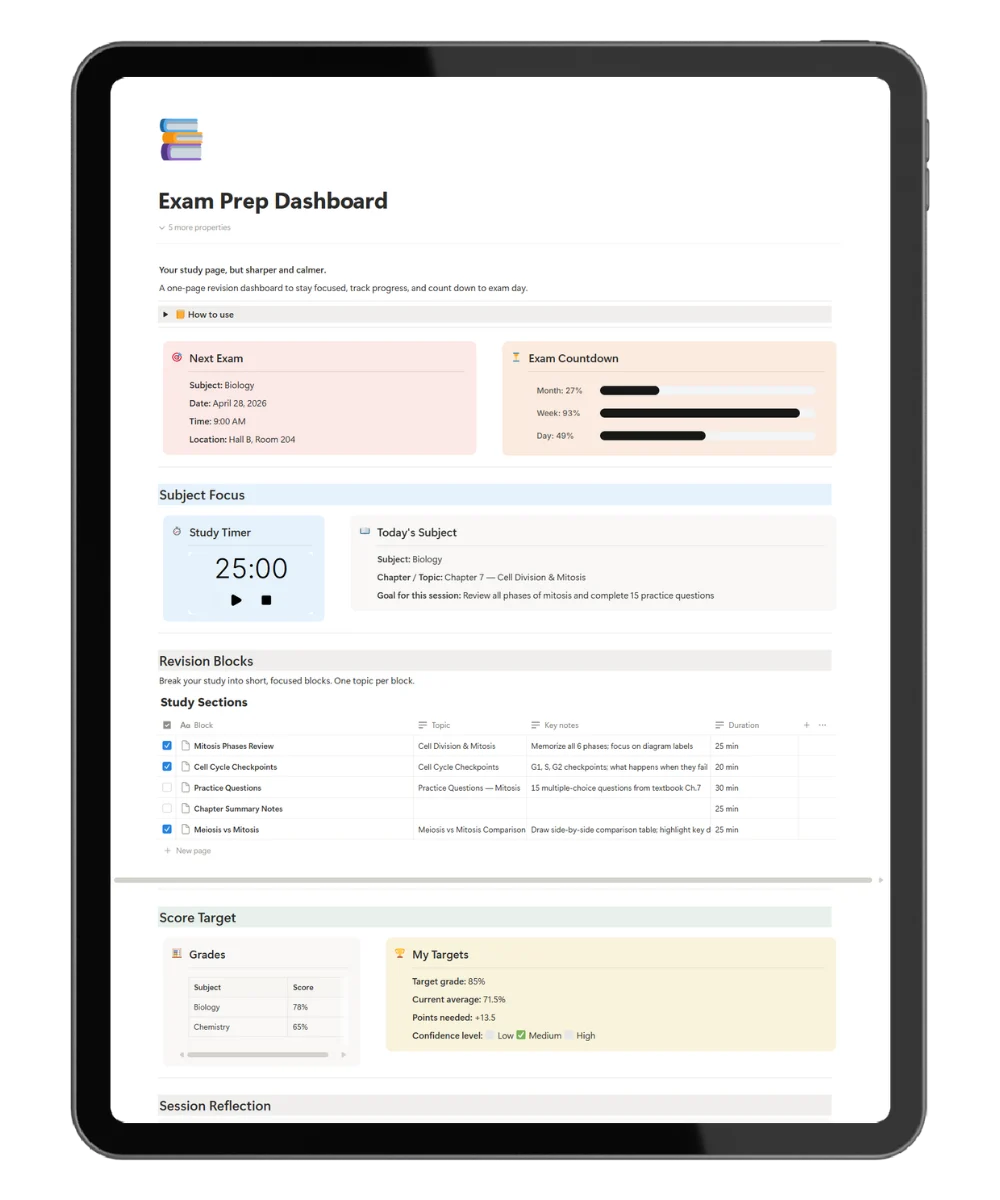
Five Core Elements in a Single Notion Page
Most exam revision planners give you a calendar and call it a day. This exam prep Notion template works differently.
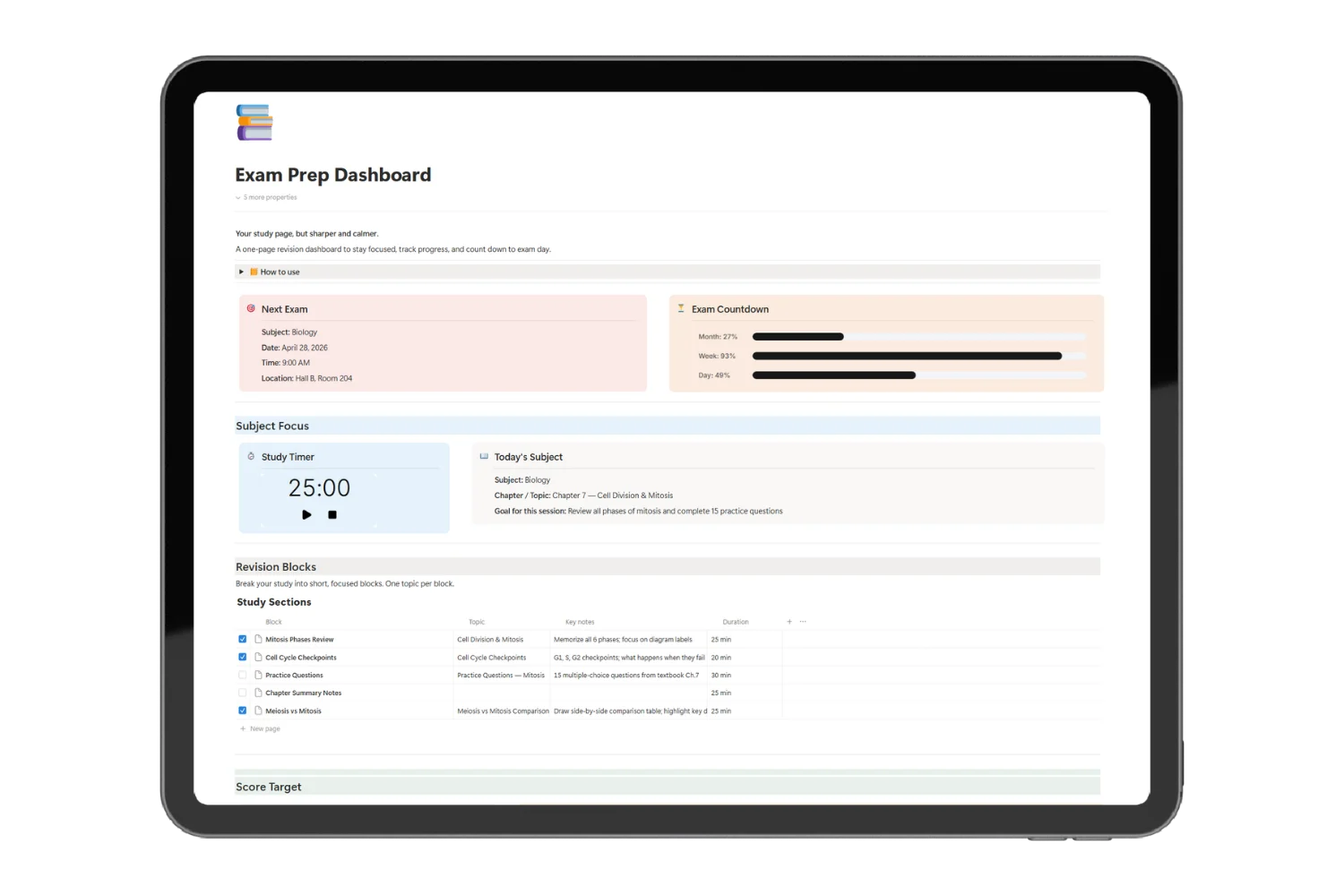
It combines five core elements into a single page to boost student productivity:
1. Exam Countdown
See the exact number of days until your next exam. Urgency stays visible without creating panic. You plan based on real deadlines, not abstract timelines.
2. Subject Focus Blocks
Set today’s subject, chapter, and session goal before you start. Pair it with a built-in study timer so every minute has a purpose. This study session tracker eliminates “I’ll just review everything” sessions that go nowhere.
3. Revision Blocks
Break your revision schedule into short, focused sessions. One topic per block. Track completion as you go. This is how top students study: small bites, full focus, clear progress.
4. Score Target Tracker
Log your current grades. Set target scores. See the gap you need to close in a simple table. Zero confusion. You always know where you stand.
5. Session Reflection Prompts
End each study block with three questions: What did I learn? What was hard? What do I review next? This small habit compounds into massive retention gains over weeks.
Who This Is For
- University students looking for an exam revision planner for midterms, finals, or comprehensive exams
- High school students who need an organized study system to manage multiple subjects during exam season
- Self-learners who want a revision schedule that builds real student productivity
- Anyone tired of messy study systems that add stress instead of removing it
How It Works
- Set your next exam date and subject — the countdown starts automatically
- Plan your revision blocks — one topic, one session, one goal
- Start the study timer and focus — no multitasking, no distractions
- Log your score after each practice test — track real progress
- Reflect, adjust, repeat — build a feedback loop that improves every session
One page. Full control. Built for calm, focused studying.
Start Studying With Structure From Day One
Students who use a structured exam prep template consistently outperform those who “wing it.” Not because they study more hours. Because every hour counts.
This study planner for students removes the friction between sitting down and making progress. The built-in study session tracker and revision schedule mean you open it, see the plan, and execute.
No setup overwhelm. No learning curve. This organized study system is ready to boost your student productivity from day one.
Frequently Asked Questions
How far in advance should I start using this for exam prep?
Research from Cornell’s Learning Strategies Center shows that spreading study over longer periods beats last-minute cramming every time. Start 3 to 4 weeks before your exam. The revision blocks and countdown make it easy to pace yourself from day one.
I have ADHD and struggle to focus during study sessions. Will this help?
Yes. The system is built around short, focused revision blocks (one topic per block) paired with a study timer. This mirrors the Pomodoro technique, which is one of the most recommended methods for students with ADHD. You study in small bites, take breaks, and track progress visually.
Does cramming the night before actually work?
No. Studies consistently show that cramming increases anxiety and leads to worse long-term retention. Students who space their study sessions over days and weeks outperform those who cram. The score target tracker helps you see progress early so you never reach the “panic cram” stage.
How do I know what to study first when I have multiple exams?
Set up a separate exam countdown for each subject. The dashboard shows which exam is closest so you prioritize based on real deadlines, not guesswork. Pair this with the subject focus block to lock in one topic per session instead of jumping between subjects.
I keep re-reading my notes but nothing sticks. What am I doing wrong?
Re-reading is passive learning. Research from UNC’s Learning Center confirms that active recall (quizzing yourself, teaching concepts, doing practice problems) is far more effective. The session reflection prompts force active recall after every study block: What did I learn? What was hard? What do I review next?
How many hours should I revise per day?
Quality beats quantity. Most education experts recommend 2 to 4 focused hours per day, broken into 25 to 50 minute blocks with short breaks. The revision blocks in this system are designed for exactly that structure. Short sessions, full focus, consistent progress.
Can I use this for standardized tests like SAT, GRE, or IELTS?
Absolutely. The score target tracker lets you log practice test scores and set target scores for any exam type. The revision blocks work for any subject or test format. Set your test date, plan your sessions, and track improvement over time.
Is it better to study one subject per day or multiple subjects?
Research supports interleaving, which means mixing subjects across sessions rather than grinding one subject all day. The subject focus block lets you switch subjects between sessions while keeping each individual session focused on one topic. Best of both approaches.