

Most solopreneurs do not undercharge by mistake. They undercharge by habit. The price field shows up, the cursor blinks, and the number that comes out is whatever felt safe last time.
After 2.5 years and 100+ template drops under Fayedtion, the months I broke through were the months I stopped guessing at price. Same templates. Same buyers. New template pricing strategy. Different revenue.
This article is for solopreneurs and Notion creators who freeze on the price field, undercharge by default, and watch peers double their numbers on objectively weaker products. It is the pricing ladder I wish I had used from drop one. Five lessons, one repeatable system, and the exact way each tier earns its price.
What you will walk away with:
- A free-core-premium ladder you map your catalog onto today
- A use-case anchoring frame that ends page-count pricing forever
- A bundle pattern that lifts AOV 2x to 3x on launch days
- A refund-signal read that tells you when to hold and when to raise
By the end, every product in your catalog will sit on a tier with a reason behind it.
Table of Contents
What You’ll Learn
Why $0 Templates Cost You More Than They Earn
A free template feels safe. Zero refund risk, zero pressure, zero awkward DMs. The math is hiding the real cost.
Every $0 template eats the same hours as a paid one. Build, polish, listing, support, screenshots, post-launch tweaks. The shipping cost is identical. The revenue is not.
Free templates also train your audience to expect free. Inside one quarter, your followers stop opening paid drops because the pattern says wait for the next freebie. Your top-of-funnel grows. Your conversion rate dies.
A working rule for solopreneur pricing: a free tier is a marketing channel, not a product. It exists to demo your style, surface qualified buyers, and feed an email list. The moment a free template is doing more than that, it is robbing the paid lineup.
If you have shipped 5+ free templates and zero paid ones, the issue is not your work. It is the pricing ladder.
The Three-Tier Ladder: Free, Core, Premium
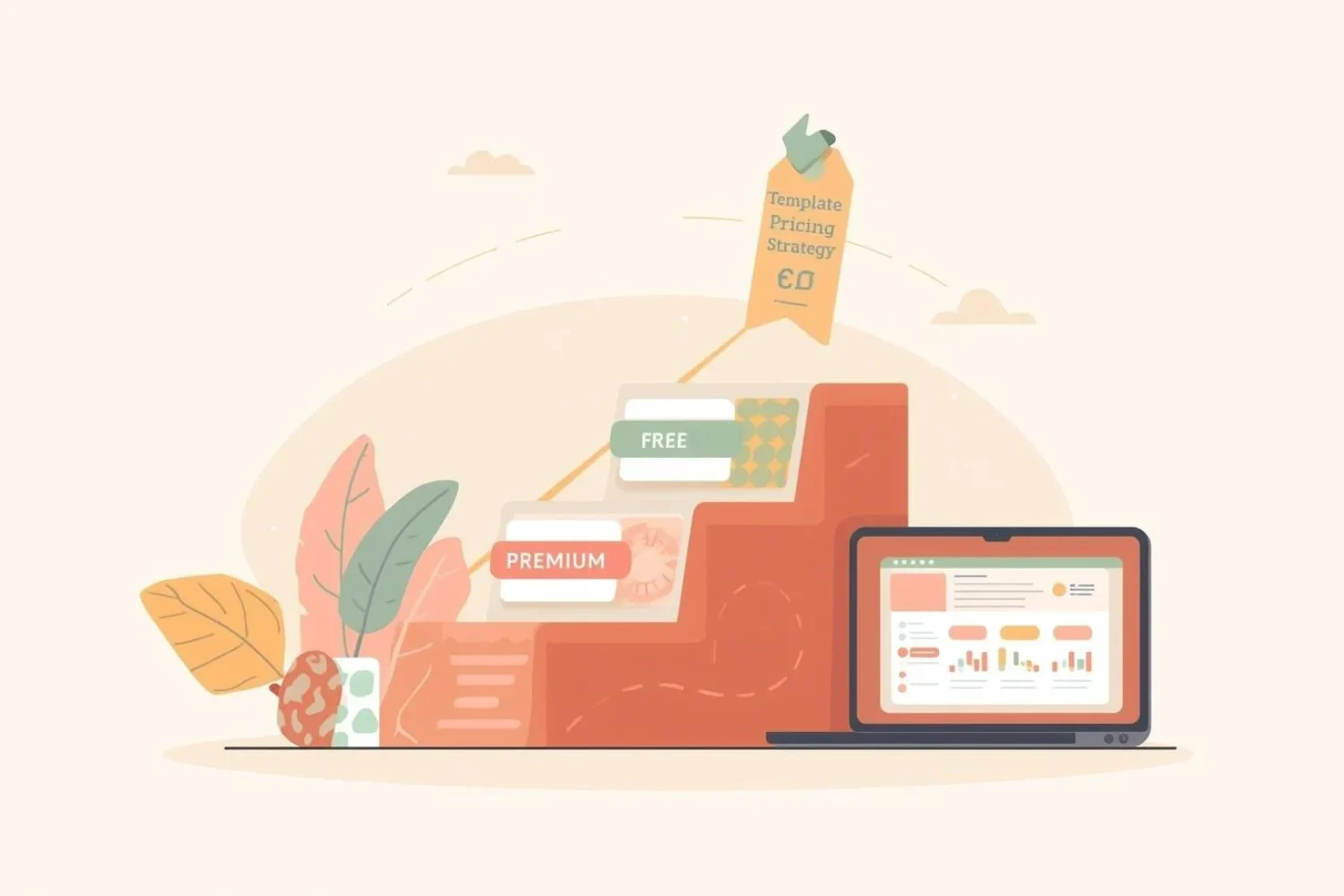
Every Fayedtion drop now sits on three rungs.
- Free: a sliced-down version of one paid template, single-use, designed to convert into the email list and demo the design language.
- Core: $9 to $29 templates that solve one tight pain in one page or one small system. Most buyers land here.
- Premium: $39 to $99 templates that bundle a system, a tracker, and a workflow into one launch-ready hub.
The ladder works because of value-based pricing. Buyers self-segment by the size of the pain they want solved. A small pain pays $14. A launch-week pain pays $79. Both feel fair.
This is also where digital product positioning earns its keep. The Free rung is positioned for discovery. Core is positioned for one job. Premium is positioned for a system. Three rungs, three messages, three landing pages.
If you are running pricing digital products without a ladder, every new drop forces a fresh price debate. The ladder ends the debate.
Anchor Price With Use-Case, Not Page Count
The fastest way to leak revenue is to price by page count. “Eight pages, so $8.” That math is invisible to your buyer. They are paying for an outcome, not a file size.
Price anchoring works on outcomes. A Notion template that saves two hours a week on a specific weekly task is worth more than 100 pages of generic notes. Lead with the outcome, then attach the price.
A simple anchoring frame for any drop:
- Name the weekly hours saved or the dollars protected
- Multiply across one quarter
- Quote your price as a fraction of that figure
A $39 template that protects $400 a month in lost client hours sells without resistance. The same template priced at $9 because “it is one page” sells half as often, because the price contradicts the outcome.
This is creator pricing strategy at the unit level. Every listing should answer one question before it shows the price: what specific result does the buyer walk away with?
When Bundles Outsell One-Off Templates
Around drop 40, bundles started outselling singles in my catalog. Not by a small margin. By 3x on launch days.
A bundle pricing strategy works because it solves the “which one do I pick” objection. A buyer staring at three related templates priced at $19 each pauses. The same buyer offered all three for $39 closes in under a minute. The discount feels like a win, the catalog clears faster, and the email list converts harder.
Two bundle patterns that consistently win:
- The system bundle: 3 to 5 templates that share a workflow (planning, tracking, reviewing).
- The launch bundle: 2 to 3 templates timed to a single event (a product drop, a quarterly review, a hiring sprint).
The launch bundle is the one I use most. It pairs a hub template with the supporting trackers a buyer needs in the same week. Same audience, higher AOV, less marketing.
If your catalog has 6+ singles and zero bundles, you are leaving the easiest revenue on the table.
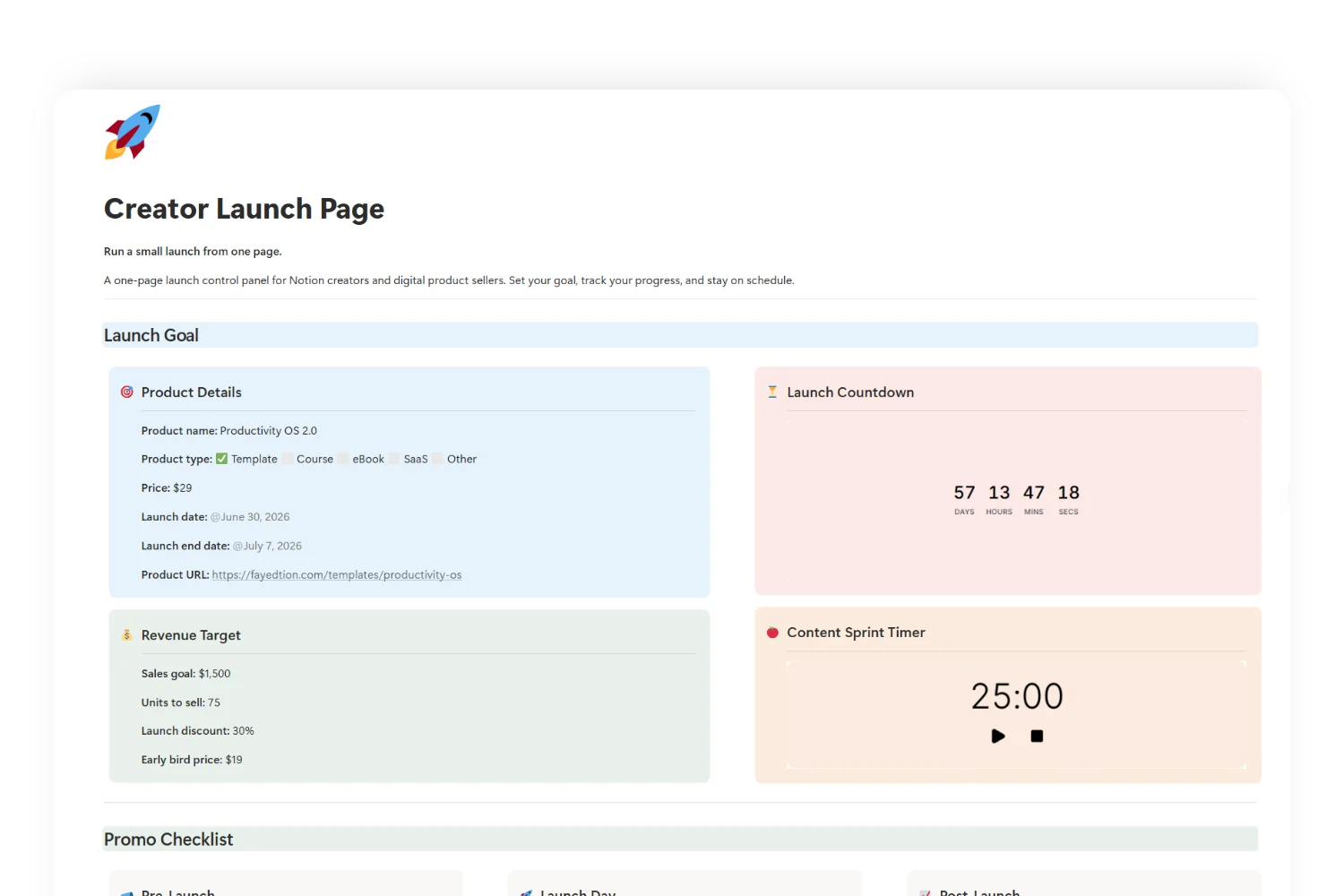
The launch bundle pattern lives inside Creator Launch Page. It is the control panel I use to plan a tiered drop, slot the hub template at the top, stack the supporting templates underneath, and run the whole launch from one Notion view.
Reading Refund Signals to Reset Your Price
Refunds are pricing data, not personal failure. The pattern in the refund inbox tells you exactly where the ladder is broken.
Three signals I track on every drop:
- “Not what I expected”: positioning is off, not price. The listing promised a different outcome.
- “Too complex for the price”: price is right, scope is too wide. Trim the template, keep the price.
- “Found a free version”: your free tier is eating the paid one. Pull the free version or shrink it.
A refund rate above 4% on a Core-tier template means one of those three signals is loud. A rate under 2% means the price has room to climb on the next drop.
The instinct is to lower the price the moment a refund hits. The data says hold. Loss aversion makes you read one refund as a signal to retreat. The numbers across 50 drops say price is rarely the problem. Loss aversion lies to solopreneurs more than any other cognitive bias on launch day.
What This Pricing Ladder Looks Like in Practice
A normal Fayedtion launch month now runs like this:
- Week 1: ship one Core template at $19
- Week 2: ship one Premium template at $59
- Week 3: pair the two with a one-page hub into a $79 launch bundle
- Week 4: review refund inbox, sales splits, and email-to-paid conversion
Three drops, one bundle, one review. The numbers I track are units per tier, refund rate per tier, and email-list-to-paid conversion. Those three numbers tell me whether the ladder is balanced.
The outcome is a calmer launch and a higher average order value. Same audience, same product calendar. Different ladder.
The Lesson Behind the Lessons
Solopreneur pricing is not a guessing game. It is a ladder.
Kill the free-only habit. Build three rungs. Anchor on outcome, not page count. Bundle when the catalog earns it. Read refunds as data. That is the entire template pricing strategy in one paragraph, on the back of product positioning work you will keep refining for years.
Open your catalog today and tag every product Free, Core, or Premium. The gaps in the ladder are the next month of revenue you have not collected yet.
FAQ
What is a good template pricing strategy for solopreneurs?
A three-tier ladder: a free demo template, $9 to $29 Core templates that solve one tight pain, and $39 to $99 Premium templates that ship a full system. The ladder lets buyers self-segment by the size of the problem they want solved.
How much should I price a Notion template?
Anchor on the weekly hours or dollars the template saves the buyer, not the page count. A single-page template that protects two client hours a week sits comfortably at $19 to $29. A launch-ready system template earns $59 to $99.
Should I offer a free Notion template?
Yes, but treat it as a marketing channel, not a product. One free template per quarter, sliced from a paid drop, designed to feed the email list and demo your style. More than that and the free tier eats the paid lineup.
What is the best pricing model for digital products?
Good-Better-Best is the pattern that holds up across creator catalogs: one entry point, one mid-tier core offer, one premium tier. Buyers anchor on the middle, the top tier pulls perceived value up, and the bottom tier feeds discovery.
How do bundles affect Notion template sales?
Bundles lift average order value 2x to 3x on launch days because they remove the “which one do I pick” objection. Pair a hub template with two supporting trackers timed to a single event for the cleanest bundle pattern.
When should I raise the price on a digital product?
Raise the price when refund rate sits under 2% across two consecutive launches and email-to-paid conversion holds steady. Raise in 20% steps, watch the next launch, repeat.