
Email marketing for digital creators is the audience layer you own when platforms shift. Algorithms change. Followers vanish overnight. Your list stays.
This guide walks through the sequences launching products, the templates you steal for your next campaign, and the lifecycle flows running revenue while you create.
TL;DR
- Email turns followers into buyers and keeps the relationship after the algorithm forgets you.
- The product launch sequence is the hero campaign for creators. Master it first.
- Evergreen funnels stack revenue per subscriber month after month with zero ongoing effort.
Table of Contents
What You’ll Learn about Email Marketing for Digital Creators
What Is Email Marketing for Digital Creators?
Email marketing for digital creators is the practice of building an owned audience list and sending automated and broadcast emails to sell digital products, courses, memberships, and templates.
Social platforms rent your audience to you. Email gives you direct access. One email to 1,000 subscribers lands in 1,000 inboxes. One post to 10,000 followers reaches around 500 of them on a good day.
Creators run email differently from agencies and service businesses:
- Audience is interest-based, not service-based.
- Revenue comes from product launches and evergreen funnels, not retainers.
- Trust scales with content frequency.
- Lead magnets are digital downloads or mini-courses, not free consults.
The output is more sales per subscriber per year. The setup centers on launches, education, and lifecycle automation.
6 Benefits of Email Marketing for Digital Creators
1. Own the Audience When Platforms Shift
Instagram updates. TikTok bans accounts. Twitter rebrands. Your email list survives every one of these events. The subscribers you collect today are still yours in five years.
2. Convert Followers Into Buyers
Most followers consume your content for free forever. Email moves them one step deeper. A free download today becomes a $47 product next month and a $497 course next year.
3. Launch Products Without Ads
A 2,000-person engaged list often does six-figure launches with zero ad spend. Email lets creators bootstrap revenue from day one without raising or borrowing.
4. Sell on Autopilot with Evergreen Funnels
A funnel built once sells while you sleep, travel, or shoot the next batch of content. The evergreen launch sequence is the single highest-leverage asset a creator builds.
5. Stack Revenue Per Subscriber Over Time
A new buyer is the start, not the end. Email lets you sell the next product, the next tier, the next workshop to the same person. Lifetime value compounds quietly through smart sequences.
6. Build a Community Around Your Work
Email feels personal in a way feeds never do. Subscribers reply. They share. They become superfans. Over time, your audience becomes the most valuable asset in your business.
7 Email Campaigns Every Digital Creator Needs
1. Lead-Magnet Delivery + Warm-Up
A lead magnet is the entry point. The warm-up sequence is the trust builder.
A five-email warm-up runs:
- Email 1 (immediate): deliver the freebie, set the tone.
- Email 2 (day 2): share your origin story.
- Email 3 (day 4): the biggest mistake your audience makes.
- Email 4 (day 6): a quick win they apply today.
- Email 5 (day 8): introduce your flagship product with a soft CTA.
This sequence runs once and converts cold subscribers into buyers on autopilot.
2. Product Launch Sequence
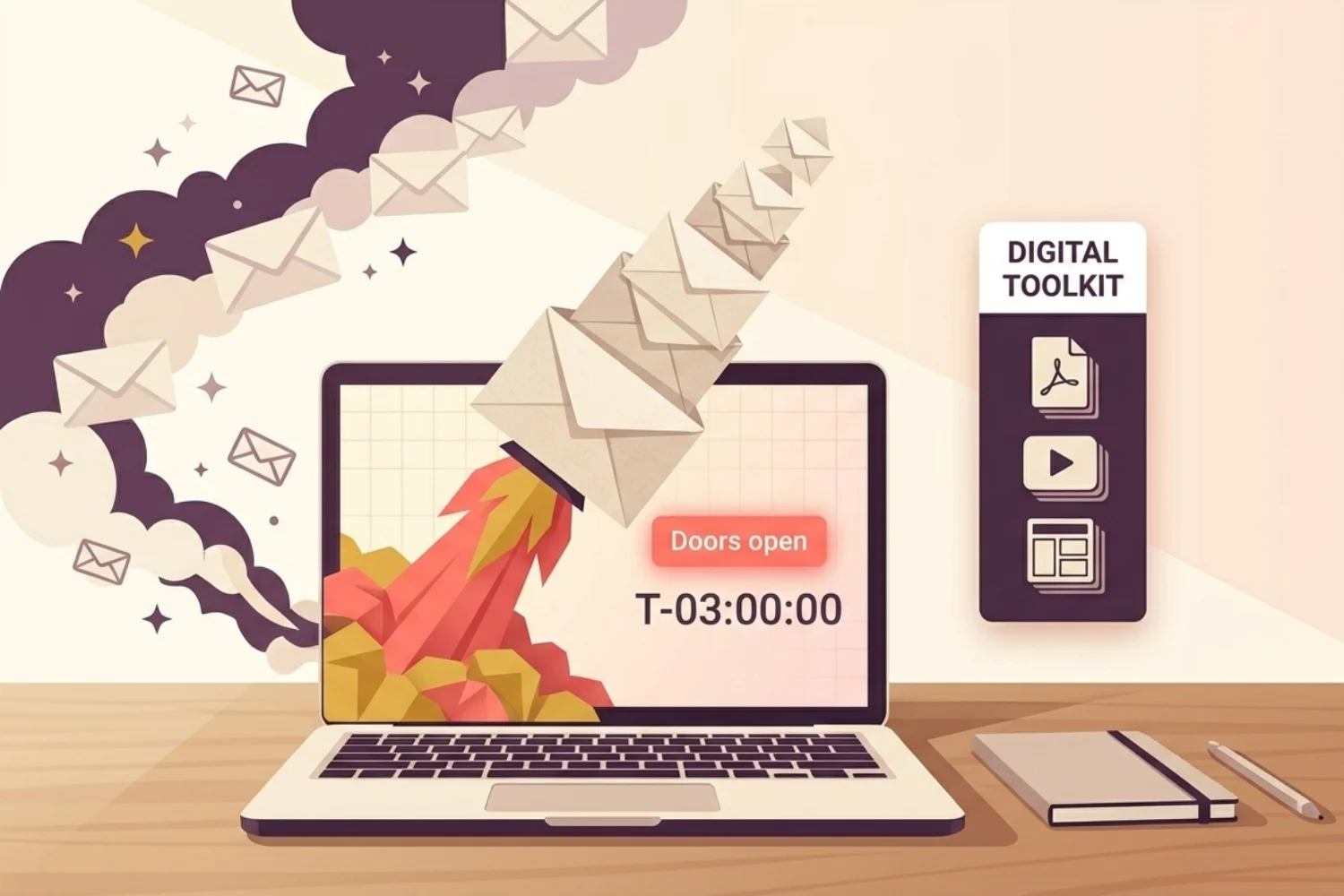
The launch sequence is where creators make most of their revenue. A typical seven-email launch:
- Email 1: pre-launch announcement (5 days out).
- Email 2: problem deep-dive (3 days out).
- Email 3: doors open.
- Email 4: case study or testimonial.
- Email 5: FAQ and objection handling.
- Email 6: scarcity push (6 hours left).
- Email 7: doors closing (last 60 minutes).
Most launches earn 60-80% of total revenue in the final 24 hours. The closing emails carry the launch.
3. Cart Abandonment for Digital Products
A buyer hits checkout and bounces. A two-email cart abandonment recovers 10-20% of lost sales.
- Email 1 (1 hour after): friendly reminder with the product link.
- Email 2 (24 hours after): one-time bonus or a short testimonial.
Set this up once and it runs forever.
4. Post-Purchase Onboarding
The post-purchase email is the most-opened email in a creator’s stack. Use it.
Include:
- Access link or login details
- A quickstart guide
- Community invite (Discord, Circle, or private group)
- Suggestions for the first action to take
- An ask for an early testimonial after week one
A strong onboarding flow lowers refund rates and raises lifetime value.
5. Course or Membership Drip
A drip campaign delivers content over weeks or months to course buyers and members. Each email reinforces a lesson, surfaces a community discussion, or points to the next module.
Drip flows reduce churn on memberships and lift completion rates on courses by 30-50%.
6. Weekly Value Newsletter
A weekly newsletter is the heartbeat of a creator brand. Pick a format and stick to it for six months.
Common formats:
- Three short ideas in one email.
- One deep teardown per week.
- Tool of the week.
- Behind-the-scenes from your latest project.
Consistency beats polish. A short Tuesday email every week outperforms a long monthly essay nobody finishes.
7. Win-Back for Inactive Subscribers
After six months of inactivity, an automated three-email win-back runs:
- Email 1: “Want to hear from me?” with a clear stay-subscribed link.
- Email 2: best content from the past six months.
- Email 3: final cut. Unsubscribed if no click in 48 hours.
This keeps deliverability high and the list lean.
3 Email Marketing for Digital Creators Steal Today
Template 1: Launch Announcement (Pre-Launch)
Subject: Something new on [date]
Body:
Hey [first name],
I’ve been heads-down on a project for the past [timeframe], and it goes live next [day].
Quick preview:
- What it is: [one sentence]
- Who it’s for: [audience]
- What you walk away with: [outcome]
List gets first access at a launch price 24 hours before public.
Doors open [date] at [time]. Block your calendar.
[Your name]
P.S. Reply with questions. I read everything before launch day.
Template 2: Value Newsletter (Three Short Ideas)
Subject: 3 ideas on [topic] this week
Body:
Hey [first name],
Three things on my mind this week:
1. [Idea title]
[Two sentences with one clear insight.]
2. [Idea title]
[Two sentences with one clear insight.]
3. [Idea title]
[Two sentences with one clear insight.]
Currently working on: [one line about your next project]
Talk next week,
[Your name]
Template 3: Doors Closing (Last 60 Minutes)
Subject: 60 minutes left
Body:
Hey [first name],
Doors close at [time]. After tonight, the price goes up by [amount] and the bonuses disappear.
What’s inside:
- [Module or deliverable 1]
- [Module or deliverable 2]
- [Module or deliverable 3]
Lock it in here: [link]
After tonight, the next chance to grab this is [timeframe].
[Your name]
Best Practices for Creator Email Marketing
Keep One Voice
Subscribers signed up for you, not a brand. Write like you talk on a podcast. Stiff copy breaks trust faster than typos do.
Segment by Interest, Not Demographics
Tag subscribers by what they download, click, and buy. A subscriber pulling your “beginner Photoshop” lead magnet wants different emails than one buying your advanced course. Segments lift open and click rates by 30-50%.
Single CTA per Email
One link, one ask. Multiple CTAs split attention. The exception is the launch closing email, which links to one product page and one “I have questions” reply prompt.
Link to the Shop in Every Email
Every newsletter, drip, and warm-up email gets a footer link to your shop, course library, or paid offer. Subscribers buy when they’re ready. The link needs to be there waiting.
Respect the Inbox
Your subscribers gave you direct access to a private space. Treat it like one. Skip clickbait. Skip fake urgency outside of real launches. Skip selling on every email.
Track Revenue Per Subscriber
Open rate and click rate are vanity metrics for creators. The number to watch is revenue per subscriber per year. A 1,000-person list earning $30 per subscriber annually beats a 10,000-person list earning $3.
Picking the Right Email Tool
Your stage decides your stack:
- Under 1,000 subscribers, no products yet: MailerLite, Mailchimp free, or Brevo free.
- 1,000-5,000 subscribers, launching products: ConvertKit, MailerLite paid, or Beehiiv.
- 5,000+ subscribers, multiple products, evergreen funnels: ConvertKit Pro, ActiveCampaign, or Customer.io.
The full breakdown sits inside the Free vs. Paid Email Automation Tools guide (internal link to come).
Pick the tool with the cleanest automation builder and tag system. Creators outgrow basic tools fast once they start segmenting.
FAQ
How often should a digital creator send emails?
Weekly at minimum. The list goes cold after two weeks of silence. During launches, daily for 5-7 days is the norm.
Is a small email list worth it?
Yes. A 500-person list of engaged superfans often outsells a 50,000-person list of cold subscribers. Quality beats quantity in creator email.
What’s the best lead magnet for creators?
Pick one of three: a useful PDF (checklist, swipe file, template), a mini-course (3-5 emails), or a discount code for first-time buyers. Avoid generic ebooks.
Should I use a creator-specific tool like ConvertKit or a general one like Mailchimp?
Creator-specific tools win on tagging, automation, and selling digital products. General tools win on price and template libraries. Start with whatever fits your budget. Switch when you outgrow it.
How do I write emails when I have nothing to sell yet?
Send a weekly newsletter sharing what you’re building, what you’re learning, and what’s working. The audience builds before the product launches. Launch into warmth, not silence.
Next Steps
Pick the campaign you ship first. Lead-magnet warm-up if you have an opt-in but no nurture. Launch sequence if your next product drops in 30 days. Win-back if half your list went dark.
Ship one sequence this week. Iterate next week. By month three, your list runs revenue while you create.
If you came here from the pillar guide Email Marketing Automation for Beginners: Sequences, Triggers, and Workflows Explained, the product launch sequence playbook is your next stop.